



Strategic Recruitment: Benefits, Key Components, and How to Build a Future-Ready Hiring System
Most companies don’t have a hiring problem they have a strategy problem. Here’s how to fix it.
You're Not Hiring Too Slowly. You're Hiring Reactively.
Here’s a scenario that should feel familiar: a team lead drops a Slack message – “We need someone for this role, like, yesterday.” Within hours, a job description is copy-pasted from an old post, blasted across three job boards, and inboxes start filling up with resumes. Two weeks in, 200 applicants. Zero that feel right. The role stays open for another month.
This isn’t a staffing agency problem or a budget problem. It’s the inevitable result of reactive hiring treating recruitment as a task that only starts when a seat is empty.
The companies that consistently hire the best people do something different. They hire on purpose, before the pressure hits. That’s strategic recruitment and in today’s market, it’s not optional.
What Is Strategic Recruitment?
Strategic recruitment is the practice of aligning your hiring process with your long-term business goals rather than scrambling to fill gaps as they appear. Instead of reacting to headcount needs, you’re anticipating them. Instead of posting and praying, you’re building pipelines, refining your employer brand, and using data to make better decisions.
The contrast with reactive hiring is stark:
- Reactive hiring starts when someone quits. Strategic hiring starts when the business sets its goals for the year.
- Reactive hiring treats every search as a one-off. Strategic hiring builds institutional muscle processes, templates, and talent relationships that compound over time.
- Reactive hiring measures success by whether the seat gets filled. Strategic hiring measures quality, speed, cost, and long-term retention.
Why Strategic Recruitment Matters Right Now
The hiring landscape has fundamentally shifted. Remote work expanded the talent pool globally but it also raised candidate expectations. Top performers aren’t waiting around for slow, disorganized processes. They’re evaluating you the same way you’re evaluating them.
At the same time, growing companies are under pressure to move faster with smaller teams. The old model a recruiter with a spreadsheet and a LinkedIn account simply doesn’t scale. The business case for strategic recruitment is clear:
- Better hires. When you define what “great” looks like before the search starts, you stop making compromises under pressure.
- Faster time-to-fill. Teams with structured processes and warm pipelines cut their hiring cycles significantly.
- Lower cost-per-hire. Fewer job board spends, less recruiter overtime, and better retention means less frequent backfilling.
- Stronger employer brand. Candidates remember how they were treated. A good process turns even rejected applicants into brand advocates.
The Three Pillars of Strategic Recruitment
If you want to build a hiring function that actually works, everything comes down to three interconnected pillars:
Your reputation is your pipeline. Candidates research you before you ever reach out. A consistent, authentic employer brand across your careers page, job descriptions, LinkedIn presence, and review sites does recruiting work 24/7 without any marginal cost. It’s not a marketing exercise; it’s a hiring lever.
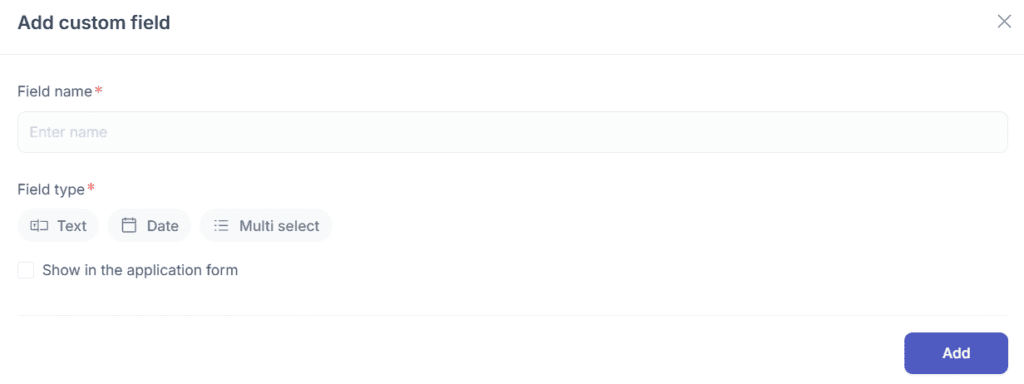
Strategic hiring doesn’t start when a resume lands in your inbox. It starts the moment a candidate finds your job listing and decides to apply and that first touchpoint is the application form.
A clunky, generic form signals exactly the kind of company you don’t want to appear to be: disorganized, impersonal, and behind the times. The best candidates the ones with options quietly close the tab.
Enfue includes branded, customizable application forms built directly into the hiring workflow. Candidates get a clean, on-brand experience from the very first click and their responses flow straight into your pipeline, organized and ready to review. No third-party tools, no copy-pasting.
Beyond the form, a structured process means every role flows through consistent stages screen, interview, assess, offer with defined criteria at each step. An ATS is the backbone that makes all of this repeatable at scale.
What Happens Without a Strategy
Organizations that skip the strategic layer tend to experience the same recurring symptoms:
Disorganized hiring
Resumes in inboxes, feedback in Slack threads, no single source of truth.
Poor candidate experience
Slow follow-ups and ghosting damage your brand even with candidates you reject.
High time-to-hire
Unclear ownership and no process means every search starts from scratch.
Misalignment
Hiring managers and recruiters disagree on what “good” looks like usually mid-search.
How to Build a Strategic Recruitment System: 6 Practical Steps
- Align hiring with business goals. Every quarter, map your headcount needs to your company’s growth targets. Don’t wait for a resignation to realize you needed a senior engineer by June.
- Define the “ideal hire” before you post. Work with hiring managers to document the must-haves, the nice-to-haves, and the non-negotiables. Scorecards make this concrete and prevent post-offer disputes.
- Start with a strong first impression. Your application form is the candidate’s first real interaction with your process. Make it branded, focused, and friction-free. Ask only what you actually need at this stage every unnecessary field costs you qualified applicants.
- Build proactive talent pipelines. Keep warm relationships with strong candidates who weren’t quite right for a previous role, or who weren’t ready yet. A CRM mindset in recruiting pays dividends.
- Standardize your stages and evaluation criteria. Every role should flow through consistent stages apply, screen, interview, offer. Every interviewer should know exactly what they’re evaluating. This is where a well-configured ATS pays off immediately.
- Automate the repetitive work. Scheduling, acknowledgment emails, status updates, and reminders drain recruiter bandwidth without adding judgment. Automation frees your team to focus on the work that actually requires a human: building relationships and making good decisions.
- Track recruitment metrics and act on them. Start with the basics: time-to-fill, source of hire, offer acceptance rate, and 30/60/90-day retention. Review monthly. The data will tell you exactly where your process breaks down.
Where Most ATS Tools Fall Short
The promise of an applicant tracking system is appealing: centralized hiring, less chaos, better data. But the reality of many legacy ATS platforms is a different story.
- Too complex to adopt. Enterprise ATS tools are built for compliance-heavy, Fortune 500 environments. A 50-person company doesn’t need a 300-page onboarding guide. If your team has to fight the tool, they’ll route around it back to spreadsheets and email threads.
- Still manual where it counts. Many platforms centralize storage but don’t actually reduce work. Moving a candidate through a stage still requires five clicks. Interview scheduling still requires email chains. The manual burden just wears a different costume.
- No ownership of the candidate experience. Most ATS tools treat the application form as an afterthought a generic embed from a third-party provider with zero branding. That’s the first impression candidates get of your company. It shouldn’t look like a government form from 2009.
- Built for recruiters, not hiring teams. The best hiring decisions are collaborative recruiters, interviewers, and hiring managers working together. Most ATS tools treat everyone outside the recruiting function as an afterthought, with clunky interfaces that discourage participation.
- Weak on data and visibility. Real strategic hiring requires real metrics. Many platforms offer surface-level reporting that tells you how many applicants you received, but nothing about source quality, hiring manager velocity, or where candidates are dropping off.
Meet Enfue: Built for How Modern Teams Actually Hire
Enfue is a modern ATS and hiring platform built for teams that want to hire strategically without the complexity, clutter, or cost of enterprise software.
It’s designed around the three pillars of strategic recruitment: structured processes, smart automation, and clear data visibility all in one place your whole team will actually use.
- Branded, customizable application forms built in, not bolted on
- Centralized pipeline so nothing gets lost in email or Slack
- Automation for scheduling, follow-ups, and status updates
- Collaborative feedback so hiring managers stay in the loop
- Recruitment metrics built in no extra dashboards needed
- Clean, fast setup hours, not weeks
If your team is still managing hiring through spreadsheets, shared inboxes, or an ATS that nobody wants to log into Enfue was built to replace exactly that.
Ready to hire with intention?
See how Enfue helps talent teams build the structured, automated, data-backed hiring process their business needs to scale.