



AI-Generated CVs Are Changing What Recruiters Can Trust
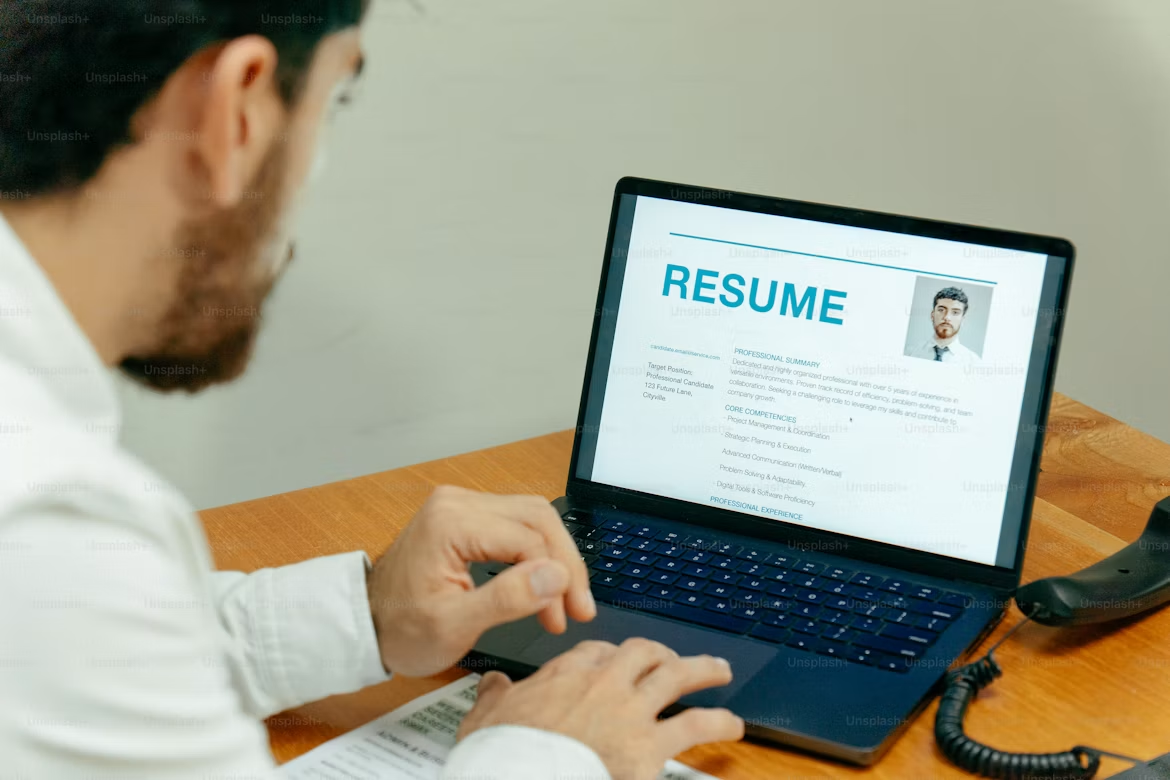
The CV has always been one of the first signals recruiters use to understand a candidate. A few years ago, a recruiter could scan a resume, look at the candidate’s experience and skills, and form an initial view of whether they might be suitable for the role. Today, that process is becoming less straightforward. With AI tools, candidates can tailor their CVs to job descriptions, improve their wording, highlight relevant keywords, and generate polished application answers within minutes. The result is a growing number of applications that look highly relevant on paper—but may tell recruiters less about what a candidate can actually do.
When Every CV Looks Relevant
The issue isn’t simply that candidates are using AI. AI can be a useful tool for candidates to communicate their experience more clearly. The bigger challenge for recruiters is that the quality of the application is becoming a weaker signal of the quality of the candidate. A CV can contain all the right keywords, use language that closely matches the job description, and present experience in a highly polished way. But none of these things necessarily demonstrate whether the candidate has the skills, judgment, or experience needed to succeed in the role.
This creates a gap between what a candidate says they can do and the evidence that they can actually do it. When hundreds of applications are optimized in a similar way, simply finding keywords or matching job titles becomes less useful as a way to distinguish candidates.
Look Beyond the CV
As applications become easier to optimize, recruiters may need to shift their attention from presentation to evidence. Instead of asking only whether a candidate’s CV looks relevant, the hiring process can look at how candidates demonstrate the capabilities required for the role. Projects, achievements, previous responsibilities, application responses, assessments, and interview performance can provide additional evidence.
Consistency also matters. Does what a candidate claims on their CV align with how they answer interview questions? Do their examples demonstrate the skills listed in their application? Do interviewers observe the same strengths that appeared on paper? Looking at these signals together can give recruiters a more complete picture than relying on the CV alone.
The Role of AI in the New Hiring Process
This doesn’t mean recruiters need to manually examine every piece of information for every candidate. In fact, this is where AI can become more useful—but its role should go beyond simply screening more CVs.
AI can help recruiters identify relevant information, compare candidate evidence against job requirements, summarize applications and interview feedback, and surface candidates who may deserve closer attention. The recruiter can then use that information to investigate further and make the final judgment.
The goal is not to replace the CV with another automated score. It is to build a hiring process where AI helps recruiters see more of the candidate, rather than simply processing more resumes.
What This Means for Recruiters
The CV isn’t disappearing, but its role in hiring is changing. As AI makes it easier to produce polished and highly targeted applications, recruiters may need to look beyond how well a candidate presents themselves on paper and focus more on evidence of capability, consistency, and relevance to the role. The challenge for HR isn’t simply learning how to detect AI-generated CVs. It is building a hiring process that can evaluate candidates on more than the quality of their presentation.
Go Beyond the CV with enfue
See how enfue helps your team screen candidates, organize candidate information, and evaluate applicants with more context—all in one hiring workspace.
Want to put this into practice? The enfue applicant tracking system (ATS) gives your team structured evaluations, a shared pipeline and AI-assisted screening in one place. Try it free for 14 days.